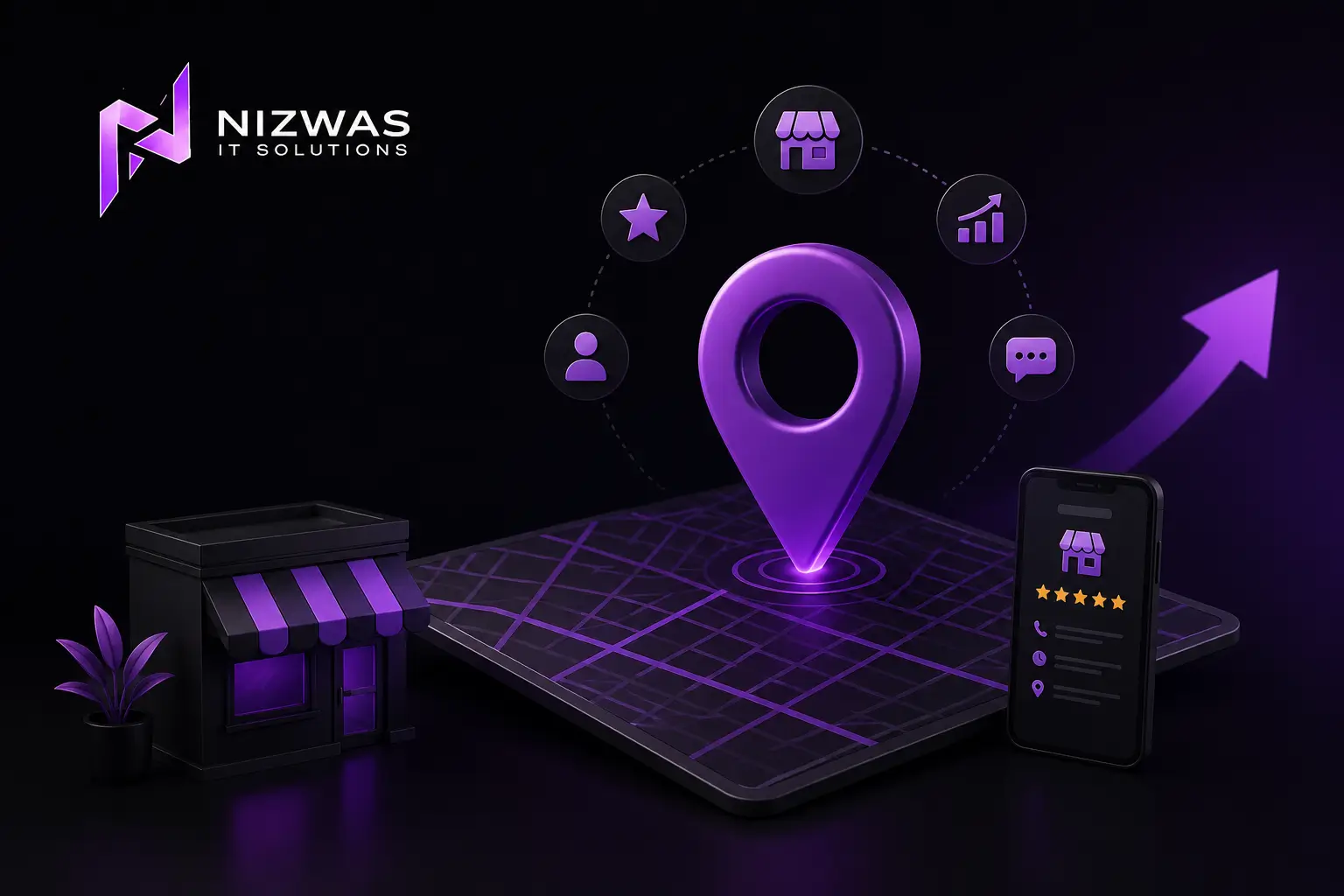
Local SEO Checklist for Small Businesses in 2026: 40+ Steps to Get Found
For a small business, being visible on Google can make the difference between a phone that keeps ringing and a website that nobody visits.
A potential customer may search for “plumber near me,” “dentist in Austin,” “best roofing company in Toronto,” or “WordPress developer near me.” In seconds, Google decides which businesses are most relevant to that search and which ones deserve to appear prominently in Maps and organic results.
That is where local SEO becomes important.
Local SEO is not simply adding a city name to your website or creating a Google Business Profile and forgetting about it. It is the process of building enough relevance, accuracy, authority and trust for search engines — and, more importantly, customers to understand what your business does, where you operate and why people should choose you.
Google says local results are primarily influenced by relevance, distance and prominence. Businesses cannot simply pay Google to receive a better organic local ranking.
For small businesses, this is good news. You do not necessarily need the biggest marketing budget in your city. You need a better local presence.
This 2026 local SEO checklist walks through the essential work, from Google Business Profile optimization to reviews, local content, citations, technical SEO and performance tracking.
Part 1: Build a Strong Local SEO Foundation
Before trying to rank for competitive local searches, make sure the fundamentals are correct.
A surprising number of small businesses start publishing blogs and buying backlinks before fixing basic information on their website and Google Business Profile.
That is backwards.
1. Claim and verify your Google Business Profile
Your Google Business Profile should be one of the first things you check.
Make sure the profile belongs to the correct business and is verified. Use the exact real-world business information customers recognize.
Complete every relevant section rather than leaving important fields blank.
Your profile should clearly communicate:
- Business name
- Primary category
- Secondary categories where appropriate
- Address or service area
- Phone number
- Website
- Opening hours
- Services
- Business description
- Photos
- Videos where appropriate
- Attributes
- Products, where applicable
- Booking or appointment information, where applicable
Google specifically recommends keeping Business Profile information complete and accurate because incomplete or incorrect information can prevent a business from appearing for relevant searches.
2. Choose the right primary category
Your primary category matters because it helps Google understand what your business actually is.
A plumbing company should not select a generic category simply because it sounds broad.
The same applies to dentists, electricians, contractors, restaurants, law firms, healthcare providers, agencies and other local businesses.
Look at competitors ranking for your most important searches and examine which categories are relevant to their businesses.
Do not choose a category simply because you think it contains a popular keyword.
Accuracy comes first.
3. Keep your NAP information consistent
NAP means:
Name + Address + Phone number
Your business information should be consistent across your:
- Website
- Google Business Profile
- Bing
- Apple Maps
- Industry directories
- Local directories
- Review platforms
- Chamber of commerce listings
- Business associations
- Other legitimate citations
For example, do not use one phone number on your website and another on a directory that still ranks in Google.
Old information can create unnecessary confusion for customers and search engines.
4. Make your website clearly local
Your homepage should make it immediately obvious:
What do you do?
Where do you operate?
Who do you serve?
For example:
Professional Plumbing Services in Denver, Colorado
is much clearer than:
We Solve Problems for Your Home.
The second headline may sound creative, but it gives search engines and visitors very little information.
Your location should appear naturally in relevant places such as:
- Page title
- H1
- Introduction
- Service sections
- Contact page
- Footer
- Image context where appropriate
- Internal links
Do not repeat the city name in every sentence. That is not optimization. It is keyword stuffing.
5. Create a real contact page
Your contact page should include useful information rather than just a form.
Consider adding:
- Business name
- Address
- Phone number
- Opening hours
- Service area
- Directions
- Embedded map where appropriate
- Appointment information
For businesses with a physical location, make it easy for customers to understand where you are.
6. Make the website mobile-friendly
Local customers frequently search while they are away from home.
A person may search for a service while standing in a parking lot, sitting in a car, walking through a neighborhood or dealing with an urgent problem.
If your website is difficult to use on a phone, you have already lost part of the opportunity.
Check:
- Mobile navigation
- Font size
- Buttons
- Forms
- Click-to-call functionality
- Image loading
- Page speed
- Layout stability
- Checkout or booking experience
A local SEO strategy that sends people to a poor website is incomplete.
Part 2: Google Business Profile and Local Search Visibility
Your website is important, but local SEO does not happen only on your website.
Google Business Profile plays a central role in how businesses appear across Google Search and Maps.
7. Write a useful business description
Do not write a description that sounds like it was created entirely for a search engine.
Explain:
- What the business does
- Who it serves
- Main services
- Areas served
- What makes the business different
- Relevant experience
For example:
We provide residential plumbing repairs, drain cleaning and water heater services for homeowners throughout Denver and surrounding communities.
That is much more useful than stuffing a paragraph with variations of “best plumber Denver.”
8. Add your actual services
List the services customers can genuinely purchase.
A contractor might have:
- Bathroom remodeling
- Kitchen remodeling
- Basement renovation
- Flooring installation
- Home additions
A WordPress agency might have:
- WordPress website development
- WooCommerce development
- WordPress maintenance
- Website speed optimization
- WordPress security
Service information helps connect your business with the searches that matter.
9. Add high-quality photographs
Photos should show the real business.
Depending on the industry, consider:
- Exterior
- Interior
- Team
- Products
- Completed projects
- Before-and-after work
- Equipment
- Vehicles
- Workspace
- Staff working with customers
Avoid relying entirely on generic stock photography.
Real images create trust.
10. Keep your hours accurate
Incorrect hours can cost customers.
Update:
- Regular hours
- Holiday hours
- Temporary closures
- Special operating hours
If a customer searches for your business and discovers that your listing says you are open when you are actually closed, the experience is poor even if you technically ranked well.
11. Use Google Posts when they are genuinely useful
Posts should support your business rather than become a weekly exercise in producing meaningless content.
Useful updates can include:
- New services
- Seasonal offers
- New projects
- Events
- Important announcements
- Helpful advice
- Frequently asked questions
The goal is not to publish something simply because you have been told to “post every day.”
Quality and usefulness matter more than filling a calendar.
12. Monitor your Google Business Profile
Check your profile regularly.
Look for:
- Incorrect information
- Duplicate listings
- Wrong hours
- Suggested edits
- New reviews
- Customer questions
- Photos
- Performance data
- Unexpected changes
Local SEO is not a one-time setup.
It is an ongoing maintenance process.
Part 3: Local Keywords, Website SEO and Content
Once the foundation is in place, move to keyword research.
The mistake many small businesses make is targeting only broad keywords.
A local business does not need millions of visitors.
It needs the right visitors.
13. Start with services, not keywords
Write down everything you actually sell.
For a plumbing business:
- Emergency plumbing
- Drain cleaning
- Water heater repair
- Leak detection
- Sewer repair
For a healthcare business:
- General consultation
- Specialist consultation
- Diagnostic services
- Preventive care
- Specific treatments
Then combine services with locations.
For example:
drain cleaning Denver
emergency plumber Denver
water heater repair Aurora
This creates a much more useful keyword map.
14. Target different search intents
Not every local search means the same thing.
Discovery searches
plumbers near me
Service searches
emergency plumber Denver
Comparison searches
best plumber in Denver
Commercial searches
affordable water heater repair Denver
Informational searches
how much does water heater repair cost
Each type can support a different page or content format.
15. Do not ignore long-tail keywords
Long-tail searches may have lower volume, but they can have stronger commercial intent.
For example:
emergency plumber open now
can be much more valuable to a plumbing company than a generic search for:
plumbing
This is why local SEO should not be built around search volume alone.
Current keyword datasets show that broad terms such as “local SEO” have significantly larger volumes, while narrower terms such as “local SEO strategy” have lower volume. The broader terms are also generally more competitive, making a balanced keyword strategy more practical for smaller sites.
16. Create dedicated service pages
Do not place every service on one giant page.
If your business offers six important services, consider creating useful individual pages for those services.
Each page should explain:
- What the service is
- Who needs it
- Problems it solves
- Process
- Pricing information where appropriate
- Service area
- FAQs
- Proof of experience
- Reviews or testimonials
- Relevant calls to action
17. Create location pages carefully
If you genuinely serve multiple cities or neighborhoods, location pages can help.
But do not create 100 pages where only the city name changes.
That produces thin content.
A useful location page should contain information genuinely relevant to that location.
For example:
- Services available there
- Local customer needs
- Service coverage
- Local projects
- Directions
- Relevant FAQs
- Testimonials from that area
- Local references
Google’s local ranking system considers relevance, distance and prominence, so simply repeating a city name does not manufacture local relevance.
18. Improve title tags and meta descriptions
A local service page could use:
Emergency Plumber in Denver | Same-Day Plumbing Service
rather than:
Home | ABC Company
The title should describe the page accurately while incorporating the location and service naturally.
19. Build internal links
Internal links help visitors move around your website and help search engines understand relationships between pages.
For example:
Homepage → Plumbing Services → Drain Cleaning → Denver Service Area
or:
Homepage → WordPress Development → WooCommerce Development → eCommerce Case Study
Use meaningful anchor text.
20. Publish genuinely useful local content
A local business blog should answer questions customers actually ask.
Examples:
- How much does a bathroom remodel cost in Denver?
- How often should a commercial HVAC system be serviced?
- What should you check before hiring a local electrician?
- WordPress maintenance checklist for small businesses
- How long does a WooCommerce website take to build?
The best local content often comes from conversations with real customers.
If your sales team hears the same question every week, that question may deserve its own page.
Part 4: Reviews, Citations, Links and Trust
Local SEO is not just about technical optimization.
People need to trust your business before they contact you.
And Google has signals that help it understand reputation and prominence.
21. Build a genuine review process
Do not wait for customers to leave reviews randomly.
Create a simple process.
After completing a project:
- Thank the customer.
- Ask for honest feedback.
- Provide the review link.
- Make the process simple.
- Respond to the review.
Never buy reviews or manufacture testimonials.
A five-star rating from a customer who never used your service may look attractive for a moment, but it creates a long-term reputation problem.
22. Focus on review quality and recency
Reviews are becoming increasingly important to consumers.
BrightLocal’s 2026 Local Consumer Review Survey found that 2 in 5 consumers read reviews every time they look for a business, while consumers increasingly care about rating quality and the recency of reviews. The study also found growing use of AI tools for local recommendations.
That means a business with 500 reviews from five years ago should not assume it automatically looks more trustworthy than a competitor consistently receiving genuine recent feedback.
23. Respond to reviews
Respond professionally to positive and negative reviews.
A useful response should sound human.
Instead of:
Thank you for your valuable feedback.
try:
Thanks, Sarah. We’re glad the team could get the water heater working again before the weekend. We appreciate you taking the time to share your experience.
For negative reviews, do not argue publicly.
Acknowledge the concern and offer a way to resolve the issue privately.
24. Build relevant citations
A citation is a mention of your business information on another website.
Potential sources include:
- Industry directories
- Local business directories
- Chamber of commerce websites
- Professional associations
- Local publications
- Trusted review websites
- Business organizations
Do not submit your business to hundreds of low-quality directories simply to create links.
Ten relevant listings can be more valuable than hundreds of spammy ones.
25. Earn local backlinks
Local backlinks can strengthen your authority.
Good opportunities include:
- Local newspapers
- Community organizations
- Business associations
- Local events
- Sponsorships
- Charities
- Industry publications
- Local partners
- Supplier websites
- Local case studies
A backlink from a respected local organization is much more meaningful than a random website that exists only to sell links.
26. Create local partnerships
This is one of the most overlooked local SEO tactics.
Suppose you are a web development company.
You could partner with:
- Local marketing consultants
- Photographers
- Branding agencies
- Business consultants
- IT companies
- Local business associations
You can collaborate on projects, resources, events and content.
Those relationships can naturally create mentions, referrals and links.
27. Strengthen your business’s real-world presence
Local authority often begins offline.
If your business participates in:
- Community events
- Industry conferences
- Local organizations
- Business networking
- Sponsorships
- Workshops
document those activities online.
Create a project page.
Publish photographs.
Mention the organization.
Share the outcome.
This gives your business a more credible digital footprint.
Part 5: Technical SEO, AI Search and Measuring Results
The final part of the checklist is often ignored by small businesses because it feels technical.
But technical problems can prevent all your other SEO work from performing properly.
28. Make sure important pages are indexable
Use Google Search Console to check whether your important pages are indexed.
Pay attention to:
- Indexing errors
- Noindex directives
- Canonical problems
- Sitemap issues
- Redirects
- Broken pages
If Google cannot properly access a page, optimizing its content will not solve the underlying problem.
29. Submit and maintain your XML sitemap
Your sitemap should contain the important canonical URLs you want search engines to discover.
Remove unnecessary URLs where appropriate.
After major site changes, check that the sitemap remains valid.
30. Improve website speed
Local SEO does not exist separately from website performance.
A potential customer who clicks your result should not wait several seconds for the website to become usable.
Review:
- Largest Contentful Paint
- Interaction to Next Paint
- Cumulative Layout Shift
- Image sizes
- JavaScript
- CSS
- Caching
- CDN configuration
- Hosting performance
- Third-party scripts
For WordPress websites, excessive plugins, poorly optimized themes and heavy page builders can contribute to performance problems.
31. Add appropriate structured data
For eligible local businesses, structured data can help Google understand information about the organization and business.
Google provides specific documentation for LocalBusiness structured data and recommends following its structured-data and Search Essentials guidelines.
Depending on the business, relevant structured data may include:
- LocalBusiness
- Organization
- PostalAddress
- GeoCoordinates
- Opening hours
- Telephone
- URL
- SameAs
Only mark up information that is actually present and accurate.
Schema is not a shortcut to rankings.
It is a way of communicating structured information.
32. Make your business information consistent everywhere
This becomes even more important as search increasingly combines information from multiple sources.
Google’s AI experiences can draw on information from across the web, and recent reporting has highlighted cases where outdated reviews, social content or confusing business information can contribute to inaccurate AI-generated descriptions of small businesses.
That makes accurate digital information more important than ever.
Your business should not have five different versions of its identity online.
33. Write content that answers real questions
AI-powered search does not eliminate the need for SEO.
It makes useful information more important.
Create content that clearly answers:
- What do you do?
- Where do you operate?
- How much does it cost?
- How long does it take?
- Who is the service for?
- What makes your business different?
- What should customers do next?
Use clear headings and concise answers.
34. Build evidence of experience
This is where E-E-A-T becomes practical.
Do not simply say:
We are experts.
Show it.
Publish:
- Case studies
- Project photographs
- Client experiences
- Team expertise
- Certifications
- Industry memberships
- Before-and-after examples
- Original research
- Detailed service explanations
A contractor can show completed projects.
A healthcare provider can explain credentials and areas of expertise.
A WordPress agency can show website launches, speed improvements and technical case studies.
Evidence is stronger than adjectives.
35. Track the right metrics
Do not judge local SEO solely by keyword rankings.
Track:
- Google Business Profile interactions
- Calls
- Website visits
- Contact form submissions
- Direction requests
- Booking requests
- Organic traffic
- Organic leads
- Local keyword rankings
- Search impressions
- Click-through rate
- Review growth
- Conversion rate
The ultimate question is not:
“Did we move from position 8 to position 5?”
It is:
“Are more qualified local customers finding and contacting us?”
That is the metric that matters.
The 2026 Local SEO Checklist
Use this as your practical checklist:
Google Business Profile
- Profile claimed and verified
- Correct business name
- Correct primary category
- Relevant secondary categories
- Complete business description
- Services added
- Accurate hours
- Correct phone number
- Correct website
- High-quality real photographs
- Profile monitored regularly
Website
- Clear location information
- Mobile-friendly design
- Fast loading pages
- Strong homepage
- Dedicated service pages
- Useful location pages where appropriate
- Optimized title tags
- Strong H1 headings
- Internal linking
- Clear contact information
- Click-to-call functionality
- XML sitemap
- Important pages indexed
- Appropriate structured data
Keywords and Content
- Service keywords researched
- Location keywords researched
- Long-tail keywords identified
- Search intent analyzed
- Keywords mapped to pages
- Local FAQs created
- Helpful local content published
- No keyword stuffing
- No duplicate location pages
Reputation
- Genuine reviews requested
- Recent reviews generated
- Reviews answered
- Negative reviews handled professionally
- No fake reviews
Citations and Authority
- NAP checked
- Major directories updated
- Industry directories reviewed
- Local citations built
- Relevant local backlinks earned
- Community relationships developed
Measurement
- Google Search Console connected
- Analytics configured
- GBP performance monitored
- Local rankings tracked
- Leads tracked
- Calls tracked
- Conversion rate monitored
Final Thoughts
Local SEO in 2026 is less about finding a secret ranking trick and more about making your business impossible to misunderstand.
Google should be able to determine what you offer, where you operate and how relevant you are to a customer’s search.
Customers should be able to verify that information quickly.
And your website should give them a clear reason to contact you.
The strongest local SEO strategy therefore connects several pieces:
Google Business Profile + Website SEO + Local Keywords + Reviews + Citations + Local Authority + Technical SEO + Useful Content + Conversion Tracking
None of these elements works in isolation.
A perfectly optimized Google Business Profile cannot compensate for a terrible website.
A fast website cannot compensate for an incomplete business profile.
Hundreds of backlinks cannot compensate for inaccurate business information.
And ranking for a keyword does not matter much if the people searching it never become customers.
For small businesses, the real opportunity is to become the most useful and trustworthy result for the customers you actually want.
That is what a successful local SEO strategy should accomplish in 2026.
Frequently Asked Questions
1. What is local SEO?
Local SEO is the process of improving a business’s visibility in geographically relevant searches on Google and other search platforms. It helps businesses reach customers searching for products or services in a specific city, neighborhood or service area.
2. Why is local SEO important for small businesses?
Local SEO helps small businesses compete for customers in their immediate market without having to compete nationally for every keyword. It can improve visibility across Google Search, Google Maps and local organic results.
3. How do I improve local SEO for my small business?
Start by optimizing your Google Business Profile, keeping business information consistent, creating useful service and location pages, earning genuine reviews, building relevant local citations and backlinks, improving website performance and tracking leads.
4. How important is Google Business Profile for local SEO?
Google Business Profile is an important part of local search visibility. Google states that local results are mainly influenced by relevance, distance and prominence, and complete, accurate business information helps Google understand a business.
5. How many reviews does a local business need?
There is no universal number that guarantees a ranking. Review quality, authenticity, rating and recency all matter to consumers. BrightLocal’s 2026 research found that consumers increasingly expect higher ratings and recent reviews.
6. Should small businesses create location pages?
Yes, when the business genuinely serves those locations and each page can provide useful, unique information. Avoid creating dozens of nearly identical pages where only the city name changes.
7. Are local citations still important in 2026?
Relevant and accurate citations can support a consistent business presence across the web. Focus on trustworthy directories, industry websites, local organizations and platforms relevant to your market rather than building hundreds of low-quality listings.
8. How long does local SEO take to work?
There is no fixed timeline. Competition, website authority, business history, location, industry and the quality of the work all affect results. Some improvements can appear relatively quickly, while meaningful local growth may take several months.
9. Can a small business rank on Google Maps without paying for ads?
Yes. Google states that there is no way to pay for a better local organic ranking. Businesses can improve their local visibility through relevance, accurate information, prominence and other legitimate SEO practices.
10. What are the most important local SEO ranking factors?
Google identifies relevance, distance and prominence as the main factors behind local results. Businesses should therefore focus on accurately communicating their services, maintaining correct location information and building genuine reputation and authority.
11. Should I optimize for “near me” keywords?
You should understand “near me” search intent, but you do not need to repeatedly add the phrase “near me” to your website. Google can understand geographic intent from the searcher’s location and other context.
12. Does website speed affect local SEO?
Website performance is part of the broader search experience and can directly affect how easily customers use your website after finding you. A fast, mobile-friendly website also makes it easier for visitors to call, book or submit an inquiry.
13. Does schema markup help local SEO?
Structured data helps search engines understand information about a page and business. Google supports LocalBusiness structured data for eligible businesses, but schema should not be treated as a guaranteed ranking boost.
14. How can local businesses prepare for AI search?
Maintain accurate business information across the web, publish authoritative first-hand content, demonstrate experience, keep reviews current, answer customer questions clearly and make important business information easy for search systems to understand.
15. What is the best local SEO strategy for a small business in 2026?
Start with the fundamentals: optimize Google Business Profile, fix website technical issues, target relevant service-and-location searches, create genuinely useful content, build genuine reviews, strengthen local authority and measure leads rather than rankings alone.